A Day in Joshua Tree
Two deserts meet in a garden of twisted trees and giant boulders two and a half traffic-dependent hours from LA. The park sells nothing inside — no water, no fuel, no signal — and that’s half its point.
The short version
- The drive from LA runs about two and a half hours on the I-10 when traffic cooperates, which it interprets loosely — early departures serve both the freeway and the entrance lines; park details at nps.gov/jotr.
- Entry is $30 per vehicle for seven days, paid at the gate or online in advance — the digital pass skips nothing on quiet days and everything on busy ones.
- The West Entrance at Joshua Tree town backs up worst on season weekends; the North Entrance’s shorter line joins the same loop road minutes later — the trick the alarm already gave you.
- Hidden Valley’s one-mile loop through a boulder-ringed basin is the park’s essential walk; Barker Dam adds petroglyphs and, in wet years, improbable water.
- Keys View drives to a 1,580-meter overlook of the whole Coachella Valley — Salton Sea to San Jacinto, smog permitting — for the day’s easiest grandeur.
- The Cholla Cactus Garden, down where the Mojave hands off to the Colorado Desert, is the two-deserts lesson in one stop: go at golden hour, stay on the path, and believe the warnings about touching.

Getting there
Leave LA early enough to make the entrance by mid-morning — the I-10 east plus Highway 62’s climb into the high desert is honest miles, and the return against Sunday westbound traffic is the day’s tax. Fuel and provisions end at the gateway towns; the alarm’s checklist is the desert’s actual entry fee. The loop road through the park connects all the headline stops, making the day a sequence of short drives and shorter walks — navigation is trivial once the offline map is aboard.
The day
Enter north or west and take the Mojave half first: Hidden Valley’s loop among the boulder cathedrals, Intersection Rock’s climbers doing their vertical choreography, Barker Dam’s petroglyph detour. Keys View before or after lunch (packed — the park sells nothing) for the valley panorama. Then drive the transition south: the Joshua trees thin, the ocotillo and cholla arrive, and the Cholla Garden’s quarter-mile glows if you’ve timed the light. Skull Rock and the Jumbo Rocks fields absorb whatever scrambling energy remains. Exit by the entrance you didn’t use, and if the night is moonless, the park’s dark-sky designation argues for one last stop with the engine off before the highway reclaims you.
When to go
October through April is the season — cool days, cold nights, and the weekend crowds the entrance-line trick exists for. Wildflower springs add color to the Colorado half in good years. Summer inverts the park: dawn and dusk only, with midday temperatures that make the no-water rule a survival fact rather than advice. Winter occasionally frosts the Joshua trees for the year’s strangest photographs. Full moons erase the famous stars; new moons make them the second show.
Frequently Asked Questions
Is Joshua Tree doable as an LA day trip?
With the early start and the drive accepted as five hours of the day: yes, thousands do it weekly. It also explains the town’s Airbnb economy — the overnight version watches sunset and stars without the westbound drive. Both are legitimate.
What actually is a Joshua tree?
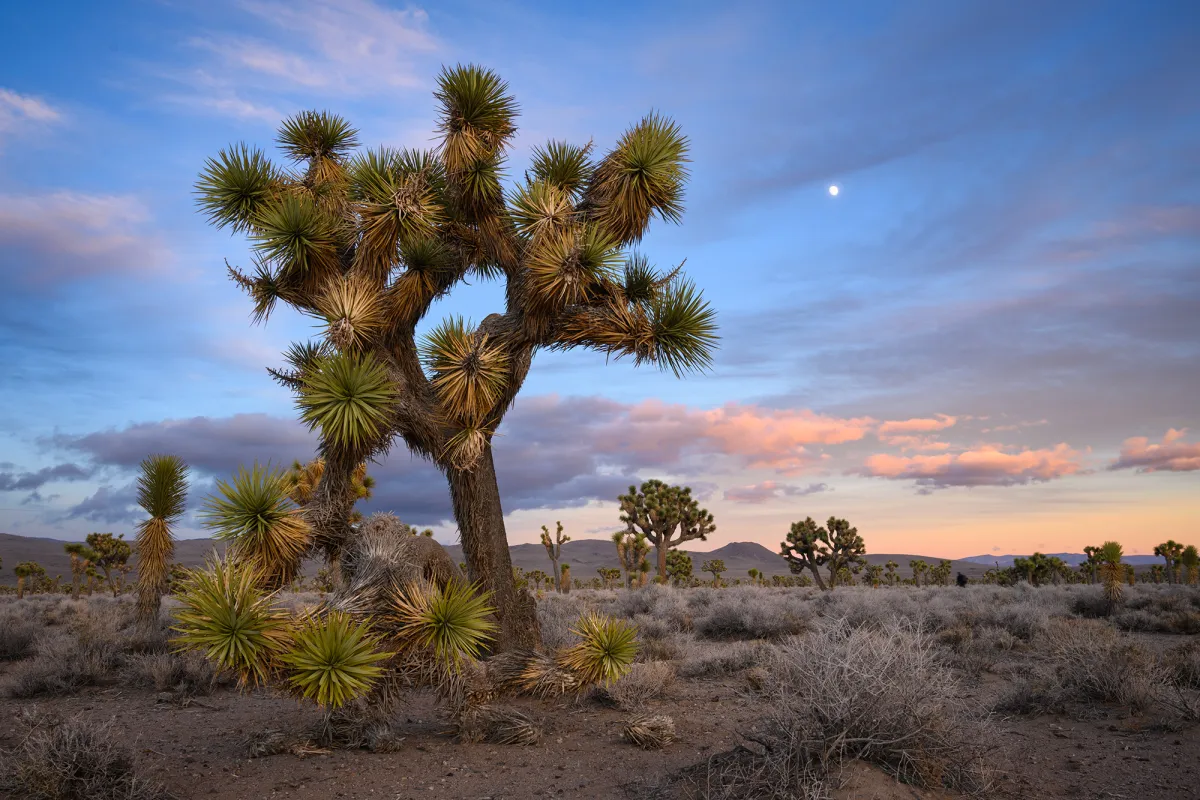
A giant yucca, not a tree — named by Mormon settlers who saw a prophet’s raised arms, growing almost nowhere else on earth. The park protects the densest forests of them; the twisted silhouettes do the rest.
Do I need to be a climber or hiker?
No — the essential stops are drives and flat miles. The boulders invite exactly as much scrambling as you bring appetite for, and the climbers are free theater everywhere.
Which entrance and what’s this queue trick?
Three entrances exist; the West one at Joshua Tree town takes the brunt. North at Twentynine Palms typically runs shorter and joins the same road — on a season Saturday it saves real time. South at Cottonwood serves I-10 through-travelers.
Joshua Tree or Anza-Borrego?
Joshua Tree for the namesake forests, the boulder landscape, and park-service polish; Anza-Borrego for emptier desert, free entry, and the sculptures. From LA the answer is here; both are documented on this network.